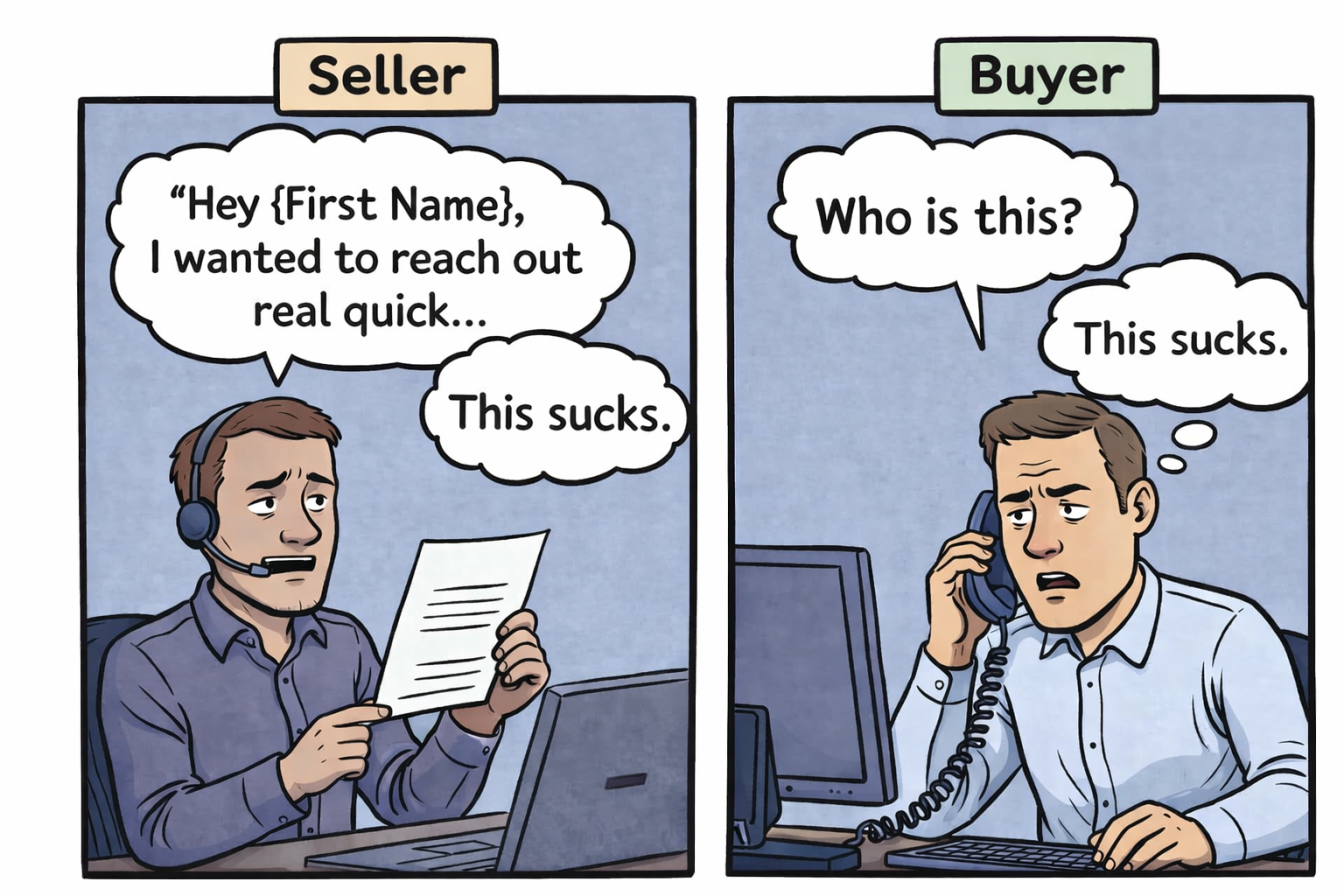
I’ve spent enough time on cold outreach to know what it feels like from both sides.
On one side, you’re the one making the calls. You’ve got your list, your script, and maybe you’ve even convinced yourself that if you just push through enough...




I’ve spent enough time on cold outreach to know what it feels like from both sides.
On one side, you’re the one making the calls. You’ve got your list, your script, and maybe you’ve even convinced yourself that if you just push through enough...
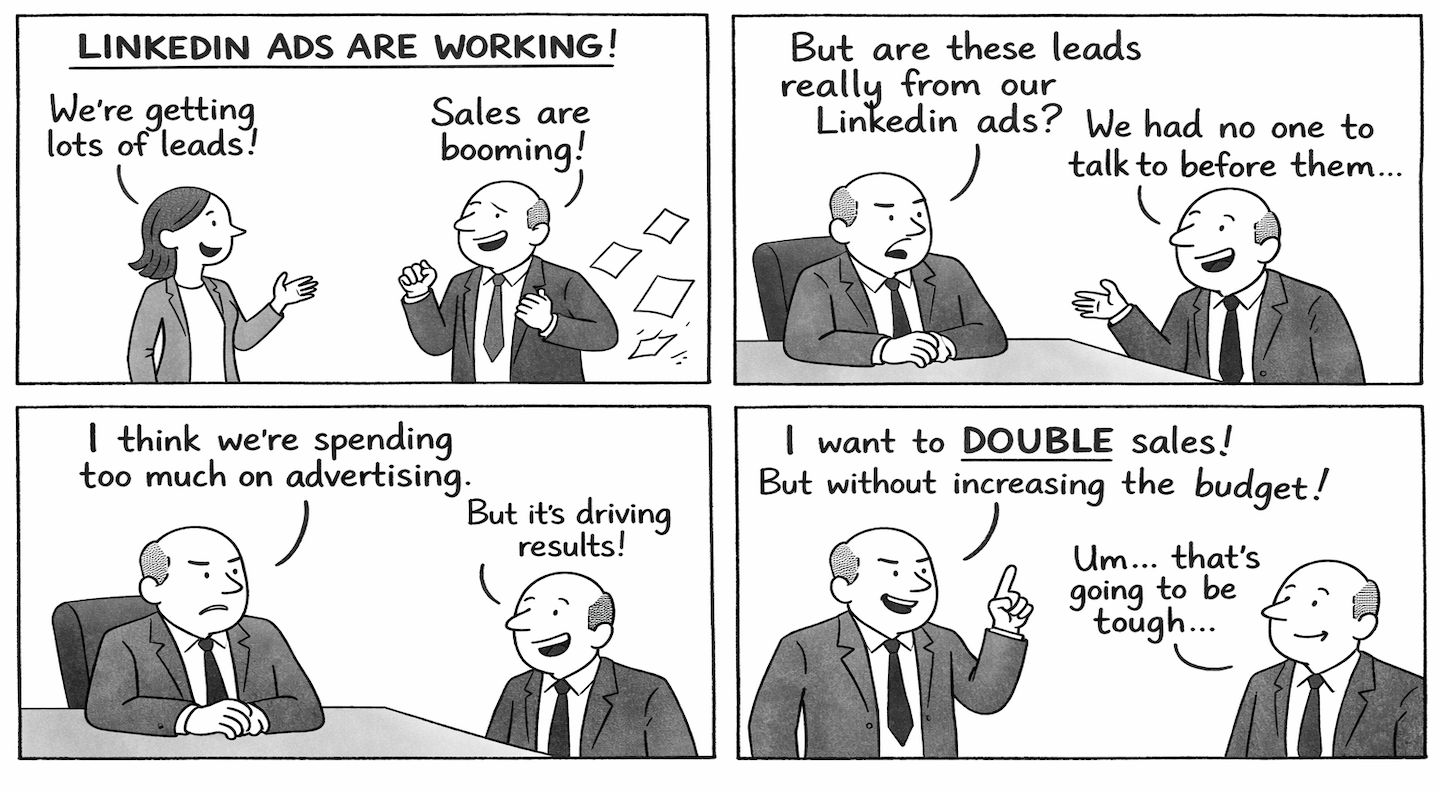
In a recent discussion with a client, their CEO asked a question that surfaces in many B2B companies once advertising budgets start to grow.
“Are these LinkedIn ads actually working?”

How much are you spending on LinkedIn ads that never turn into sales conversations?
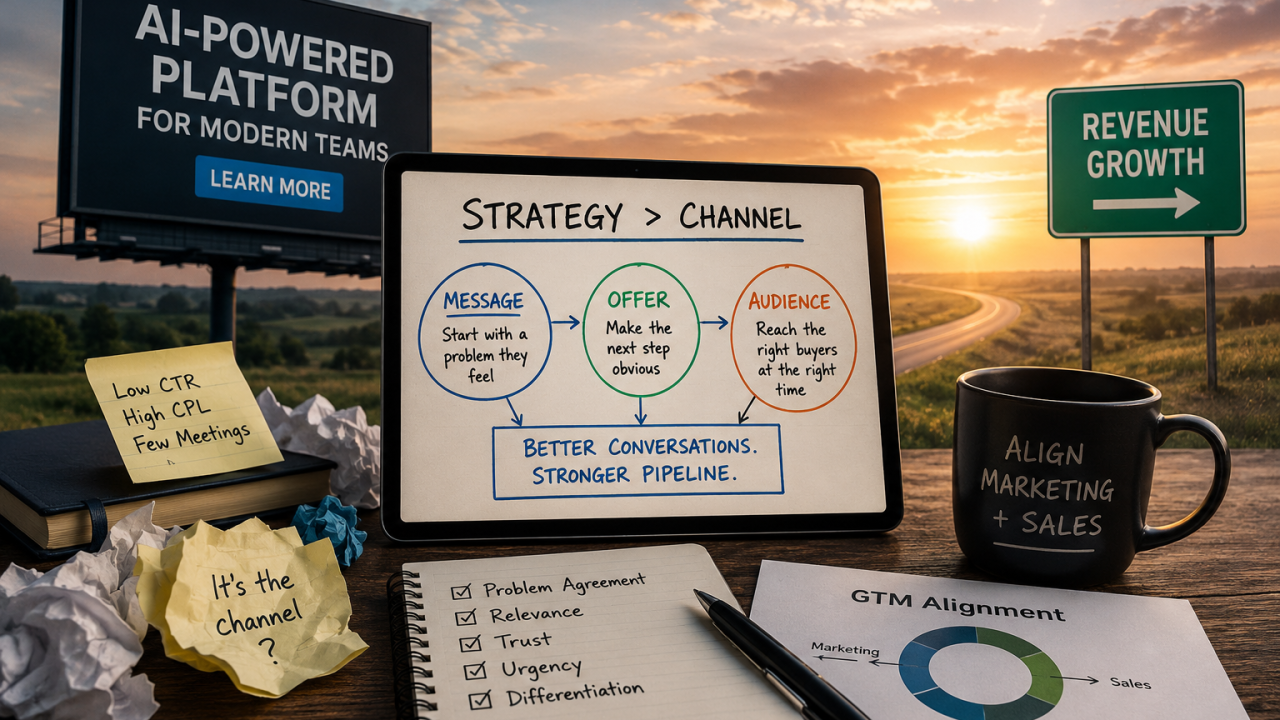
The pressure to generate pipeline hasn’t gone away, but the channels that used to make that job feel manageable are getting less predictable.

In conversations with CEOs about their go-to-market strategies, I increasingly hear the same concern: channels that once produced pipeline with some degree of predictability are no longer performing the way they used to.

Third-party intent data became popular for a good reason.
Buyers were doing more of their research online and through social networks before talking to sales, and companies wanted to identify intent early enough to get into the buying process before...
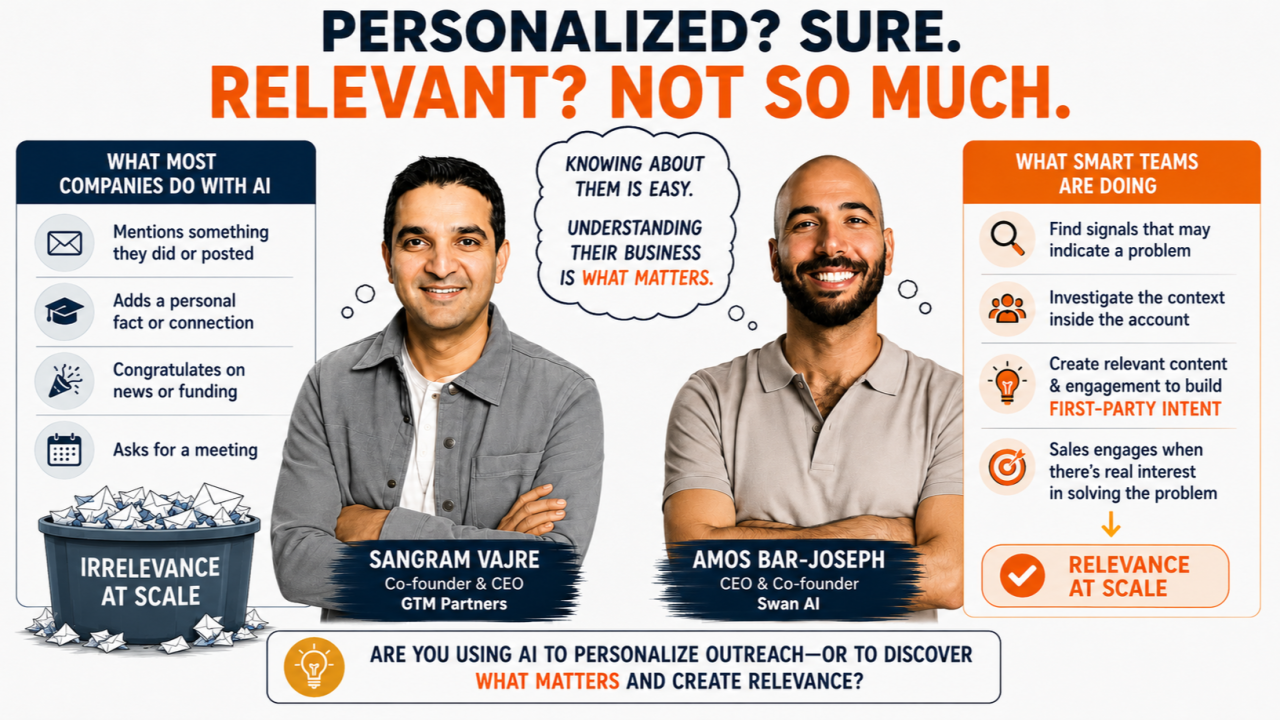
For a long time, the Predictable Revenue model worked. Marketing generated clicks, SDRs worked large lists through standardized sequences, and AEs closed enough of them to justify the machine.
As those tactics became less effective—buyers stopped...
The pressure to generate pipeline hasn’t gone away, but the channels that used to make that job feel manageable are getting less predictable.
Organic traffic is harder to earn, paid search is changing as AI answers more questions before anyone...
At a recent roundtable discussion with SaaS marketing and revenue leaders, one participant described an AI initiative that had consumed months of effort and produced little in return.
In a recent discussion with a client, their CEO asked a question that surfaces in many B2B companies once advertising budgets start to grow.

