


Not long ago, cranking out blog posts and white papers was a surefire way to fill your pipeline.
Today? You’re publishing nonstop, but the results just aren’t there.
Google has changed the rules—but not in the way most marketers think. It’s not just about depth or expertise. What’s actually driving rankings?
- User engagement signals – If people click, stay, and engage, Google takes notice.
- High-quality backlinks – Authority still matters, but only from the right sources.
- Content that matches search intent – Relevance beats volume every time.
- Brand authority and recognition – The more people trust you, the more Google does too.
At the same time, Google’s real goal isn’t to send traffic to your site—it’s to keep users on Google.
AI-powered search snippets now deliver instant answers, reducing the need for users to click through.
Rand Fishkin of SparkToro has highlighted that less than half of Google searches now result in a click.
Google also favors large, well-established publishers, making it nearly impossible for most companies to break onto page one.
This shift reflects a deeper change in buyer behavior.
People aren’t following a linear journey through SEO-optimized blog posts anymore.
They’re scanning, jumping between sources, and relying on AI, communities, and dark social to get the answers they need.
The real problem isn’t just Google. It’s your audience.
Buyers are drowning in content. More blog posts, more insights, more “thought leadership” isn’t helping—it’s overwhelming them.
They don’t need another take.
They need clarity. They need context.
Without it, they’re stuck—uncertain, overloaded, and unable to move forward.
Stop adding to the pile.
Start creating content that connects the dots, guides decisions, and actually earns attention.
The Old Playbook: Volume Over Value
For years, the formula for successful content marketing seemed simple: publish as much as possible, covering every topic even tangentially related to your audience.
This approach worked for companies like HubSpot, whose expansive content strategy turned them into a marketing juggernaut.
However, this playbook has run its course.
Algorithms have changed, and buyers have changed. What used to feel like a surefire strategy now feels like shouting into the void.
The idea behind the old playbook was straightforward: produce enough content, and you’ll inevitably capture your audience at some point in their buyer journey.
For a while, it worked. Google rewarded sites that churned out consistent, keyword-rich content, and buyers appreciated a steady stream of helpful articles, even if not every piece directly addressed their needs.
Today, though, Google’s priorities have shifted.
Algorithms now prioritize depth over breadth, favoring content that gets straight to the point and offers real value.
For SaaS companies, this means focusing on highly targeted content that addresses specific challenges your buyers face, rather than covering broad or tangential topics.
This shift not only aligns with Google’s updated preferences but also meets your audience’s demand for actionable, relevant insights that speak directly to their needs.
At the same time, Google’s own tools, like AI-powered snippets, have started keeping users on the search results page rather than driving traffic to your site.
If you’ve noticed a drop in engagement despite maintaining your content cadence, this could be why.
Buyers no longer need to click through to find answers; Google hands it to them on a platter.
It’s not just about search engines. Buyers themselves are savvier.
They’ve seen it all before—the guides, the blog posts, the eBooks.
More often than not, they’re left asking, “So what?”
Without a clear, immediate connection to their specific challenges, even the most well-written content gets lost in the noise.
The New Playbook: Context Over Content
The problem today certainly isn’t a lack of content—it’s an overload of it.
Buyers aren’t just consuming your blog posts or white papers; they’re juggling competing insights from analysts, advisors, and other vendors, all clamoring for their attention.
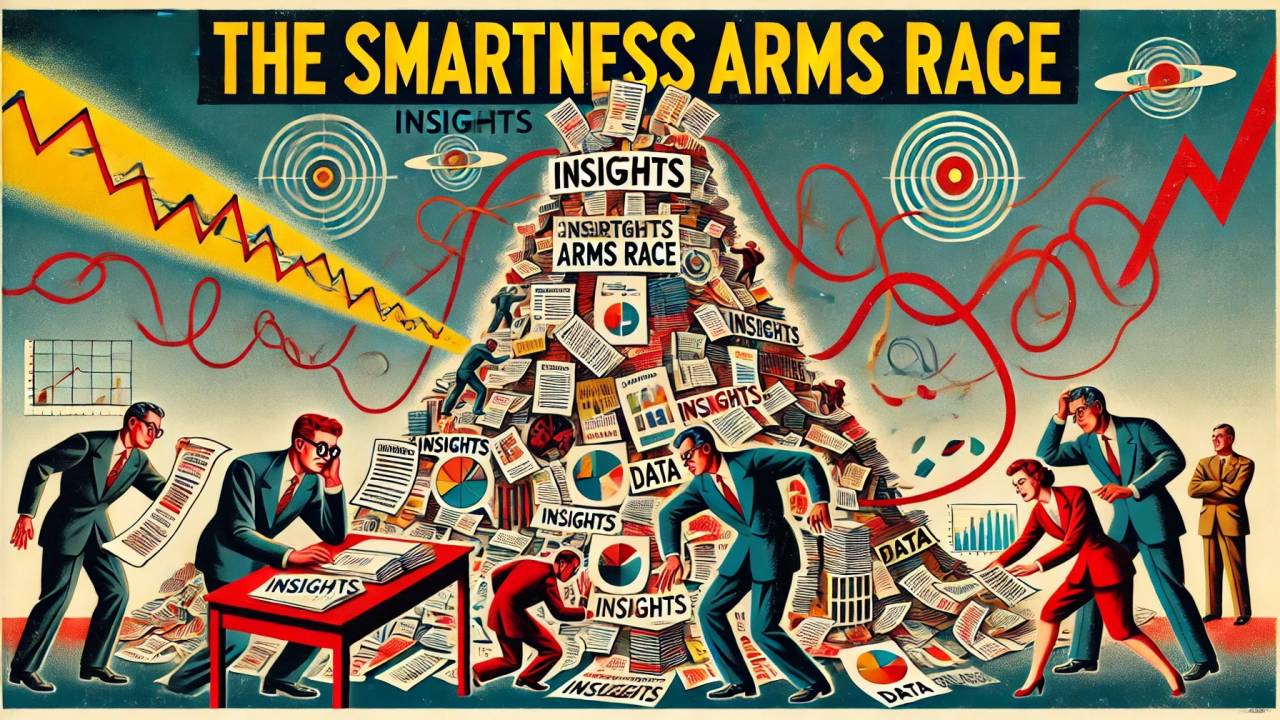
Brent Adamson son calls this the "smartness arms race." Every company is trying to outdo the next with fresher insights, better data, and more thought leadership.
But instead of feeling inspired to take action, buyers feel buried. “They’re not saying, ‘Wow, I need to do something different.’ They’re saying, ‘Wow, there’s another thing I need to worry about,’” Adamson explains in his HBR article, Sensemaking for Sales.
The way forward isn’t producing more content—it’s producing content that helps buyers connect the dots.
For instance, rather than pushing another white paper on industry trends, curate a guide that ties those trends to your buyers' specific challenges.
If they’re researching automation tools, don’t just list product specs—show how those tools integrate into their workflows, eliminate bottlenecks, and solve real business problems.
This approach simplifies decision-making and proves that you understand their challenges.
Buyers don’t need more information—they need clarity.
Why Context Wins
Today’s buyers aren’t just overwhelmed with information—they’re drowning in it.
They’re consuming vendor content, third-party reports, analyst opinions, and peer recommendations, all while trying to make a high-stakes decision.
But instead of feeling informed, they feel stuck.
Brent Adamson, in Sensemaking for Sales (Harvard Business Review), explains that when buyers are overloaded with conflicting information, they lose confidence—not just in vendors, but in their ability to make a decision at all.
He writes, “A lack of self-confidence impedes big deals more often than a lack of confidence in a particular vendor does.”
Therefore, the key to winning attention isn’t more content—it’s better framing, guidance, and clarity.
Adamson outlines three essential activities that help buyers move forward:
- Connecting – Providing curated, relevant insights that are directly applicable to their specific needs.
- Clarifying – Helping them prioritize and understand the most critical information.
- Collaborating – Engaging in dialogue that guides them toward better decisions.
How to Modify Your Content for a Sensemaking Strategy
- Shift from SEO-Driven Content to Buyer-Led Narratives Focus on problems worth solving—not just what your product does, but the gaps and inefficiencies buyers already recognize. Ditch broad, generic topics. Zero in on pain points buyers are actively trying to solve and position your content as a roadmap. Write with the next step in mind—every piece should move buyers toward clarity, not just more information.
- Turn Thought Leadership into Decision-Making Guides Instead of publishing another industry trends report, explain what the trends actually mean and what action buyers should take. Structure content around real-world applications—show how companies like theirs are solving the same problems. Rework case studies into decision-making frameworks, guiding buyers to evaluate their own situation rather than just reading about someone else’s success.
- Make Curation as Valuable as Creation Summarize and contextualize third-party research instead of just adding another perspective. Compare solutions and strategies in an unbiased, decision-focused way to help buyers cut through conflicting advice. Create "What This Means for You" guides that distill complex industry reports into clear, actionable takeaways.
- Guide Buyers to the Right Questions, Not Just the Right Answers Instead of pushing product features, create self-assessment tools that help buyers evaluate their challenges. Write content around common sticking points—what typically slows down the buying process, and how to overcome it. Use interactive formats—decision checklists, guided comparisons, and "Which Solution Is Right for You?" tools—to give buyers a sense of control.
- Turn Content into an Active Conversation Test different angles on organic social channels to see what resonates before committing to full-scale content pieces. Facilitate discussions in Slack communities, LinkedIn groups, and forums where buyers already engage. Use content as a jumping-off point for live discussions, Q&As, and webinars where buyers can interact with experts.
Content that wins today isn’t just informative—it’s actionable, decision-focused, and built for engagement. Buyers don’t need more content. They need content that helps them move forward.


